





Table of Contents
For years, media monitoring has been one of the most common tools for tracking the presence of a company, brand, or spokesperson in the media. Its function was clear: to compile appearances in print, radio, and television to determine where, when, and in what context a particular entity had been mentioned. This usefulness still exists, but today it is insufficient to answer the questions that truly matter to an organization.
Because knowing that a company appears in the media is one thing, and understanding it is quite another. what impact does that presence have on their reputation, What narratives is it reinforcing, what attributes is it projecting, and how does it compare to its competitors? In an increasingly saturated public environment, simply measuring the volume of mentions no longer allows for a proper interpretation of reality. The real challenge is transforming scattered information into useful knowledge for better decision-making.
What is clipping?
A media clipping is the organized collection of mentions that an organization, person, brand, or topic receives in the media. Traditionally, the term referred to the physical clipping of news articles from print media, but with digitization, it has come to include content from radio, television, online newspapers, and other news outlets.
Its initial objective is simple: to gather relevant media appearances in one place so they can be reviewed, classified, and used to track an actor's media exposure. From this perspective, media clipping remains a useful tool because it allows information to be organized and provides an initial snapshot of an organization's public presence.
However, that snapshot only shows the surface. Knowing that a company has appeared twenty times in the press or that an executive has been mentioned on the radio doesn't, in itself, explain whether that presence has strengthened or damaged its public standing. Nor does it clarify which narratives are gaining traction or which issues are shaping the public perception of that organization. That's where traditional media monitoring begins to fall short.
Clipping in press, radio and television
Although the concept is common, clipping takes different forms depending on the medium being analyzed.
In press, Clipping has historically been associated with the collection of news stories, reports, interviews, opinion pieces, or columns in which a company, brand, or spokesperson appears. Its main strength is that it allows for a detailed review of the editorial approach, the treatment of the topic, and the space a media outlet dedicates to each issue.
In radio, media clipping adds a layer of complexity because the information is transmitted in audio format and often in more spontaneous contexts, such as talk shows, news bulletins, or live interviews. Here, not only does the mention matter, but also the tone, the context of the conversation, and the type of association that is formed around the person being analyzed.
On television, the audiovisual dimension also introduces elements of set design, image, information hierarchy, and visual context. A brief mention in a news report is not the same as a prolonged appearance in an interview or debate. Television not only informs: it also shapes perception, reinforces attributes, and consolidates narrative frameworks.
Therefore, although press, radio and television clipping remains necessary as a starting point, its real value increasingly depends on the ability to interpret what each appearance means within a broader reputational environment.
What is the real purpose of clipping?
In its most basic form, media clipping allows you to document media coverage, track campaigns, detect relevant mentions, and maintain an organized history of public appearances. It can also help identify recurring media outlets, key journalists, related topics, or moments of peak news intensity.
But its greatest utility emerges when it ceases to be understood as a simple impact record and becomes integrated into a more ambitious analysis system. Because an organization doesn't just need to know where it's coming from, but to understand:
- that narratives They are shaping their public position
- which dimensions of their reputation are being strengthened or eroded
- which media, actors, or debates are having the greatest influence on that construction
- how all of this evolves over time.
In other words: clipping is truly useful when it becomes a basis for analyzing impact, not just presence.
From newspaper clippings to reputational impact analysis
The evolution of media monitoring reflects a deeper shift in how we understand communication. Previously, simply demonstrating media presence was enough. Today, that is no longer sufficient. An organization can accumulate significant visibility and still be losing reputation. Conversely, it can appear less frequently, but with a more favorable framing, more consistent with its strategy, and more effective in consolidating its positioning.
Therefore, advanced public space analysis is no longer limited to content collection. It seeks to interpret how that content affects the reputation, communication effectiveness, and symbolic capital of organizations and their leaders. This approach allows for a shift from monitoring to strategic intelligence.
Instead of focusing on questions like "how many times have we appeared?" or "in which media outlets did we appear?", the analysis shifts towards much more valuable ones: "what narrative is being consolidated about us?", "what attributes are being associated with us?", "what themes explain our reputational evolution?" or "are we turning visibility into useful positioning?".
Why clipping is not enough today
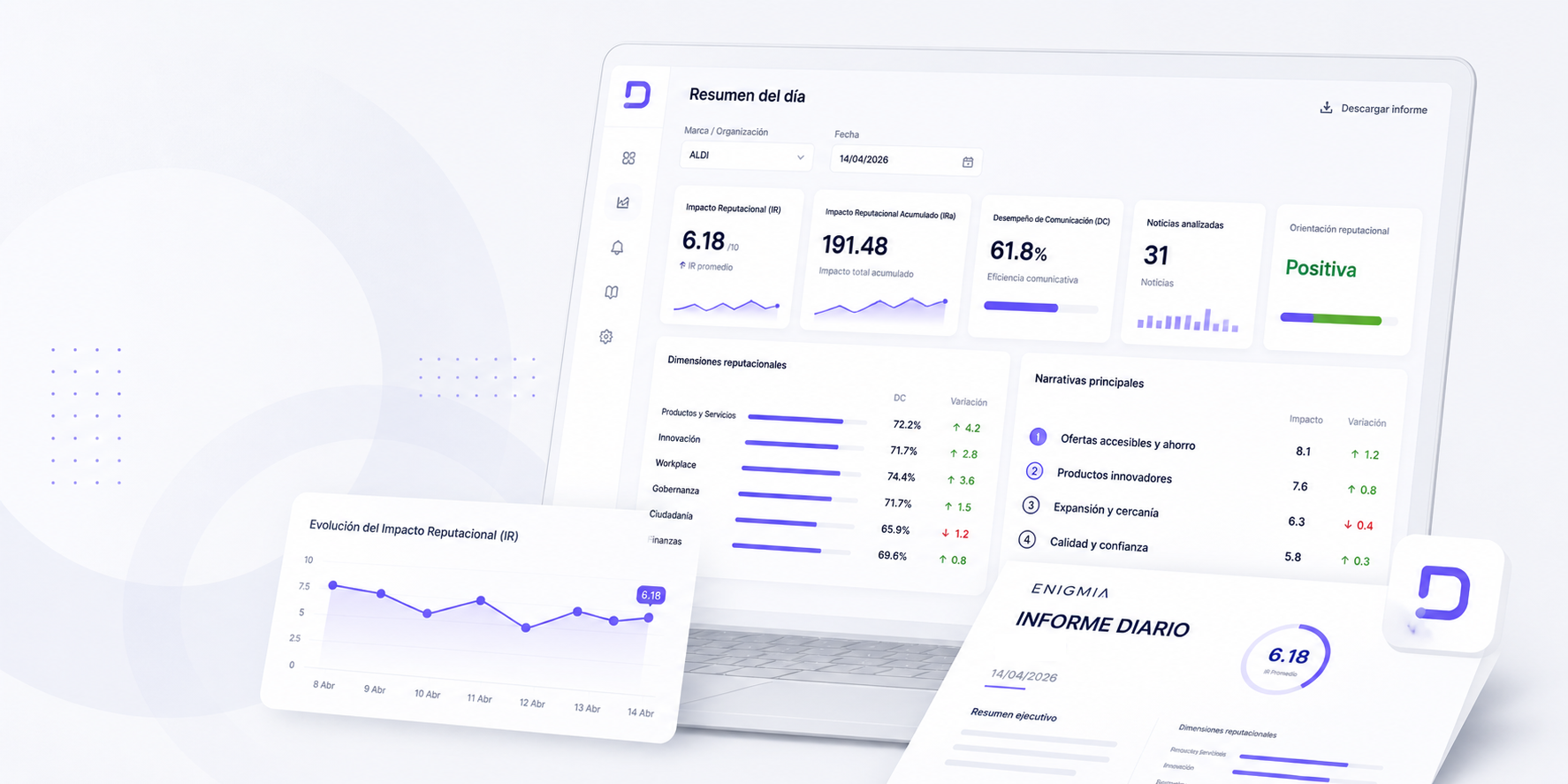
The major limitation of traditional media monitoring is that it describes the conversation, but doesn't always explain it. It can count mentions, rank impacts, and facilitate searches, but it's not enough on its own to interpret complex phenomena such as reputation, public leadership, or the consolidation of narratives. This is precisely one of the clearest shortcomings of approaches focused solely on communicative activity, volume, or reach.
In today's environment, organizations operate in a public sphere where media, networks, institutional actors, and social debates constantly interact. In this context, effective communication management requires more than simply compiling media appearances: it demands measuring the impact of those appearances on public perception and understanding the narrative logic that connects them.
Therefore, clipping remains useful, but it can no longer be the end of the process. It must only be the starting point.
Conclusion
Press, radio, and television clipping remains a valuable tool for organizing and tracking an organization's media presence. It allows you to know where it appears, in what context, and how often. But in an environment where reputation and narratives increasingly shape the public position of companies, institutions, and leaders, that level of analysis is no longer sufficient.
Today, true value lies not only in gathering media coverage, but in interpreting it. Not just in seeing mentions, but in understanding their impact. Not just in measuring visibility, but in analyzing reputation, positioning, and influence. That's where the true strategic analysis of public space begins.












 Spanish
  English
  Portuguese
  French
  German
  Italian